
A practical decision path for 6 Gas Monitor, starting with trade-off framing shortlisting
Specification writers assessing a 6 gas monitor should begin by defining the decision, not by collecting an unstructured list of features. The immediate task is to describe what must be compared, which evidence is relevant, and which requirements remain unresolved. This approach keeps a shortlist useful without turning a catalogue description into a broader conclusion about suitability, compliance, or performance.
Clarify the decision before comparing options
A shortlisting exercise normally has several separate questions. The first is scope: is the document comparing a product category, a named model, or a proposed item for a particular operating context? The second is evidence: which statements come directly from a product page, and which are general questions for the procurement or engineering team?
Write these questions at the top of the working document before reviewing candidates:
- What decision must the shortlist support?
- Which characteristics are essential to compare?
- Which requirements are still being defined?
- Which conclusions would require evidence beyond the available product information?
This separation matters because a product page can describe a model without establishing that it meets every requirement in a proposed installation. It also prevents a general category statement from being treated as a model-specific specification.
Build a concise trade-off framework
A practical framework should make differences visible without implying that one option is universally better. Use a table with four columns: requirement, evidence available, decision significance, and unresolved point. The requirement column states what the project needs. The evidence column records the exact supported description. Decision significance explains why the item matters to the shortlist. The unresolved point identifies the question that still needs an answer.
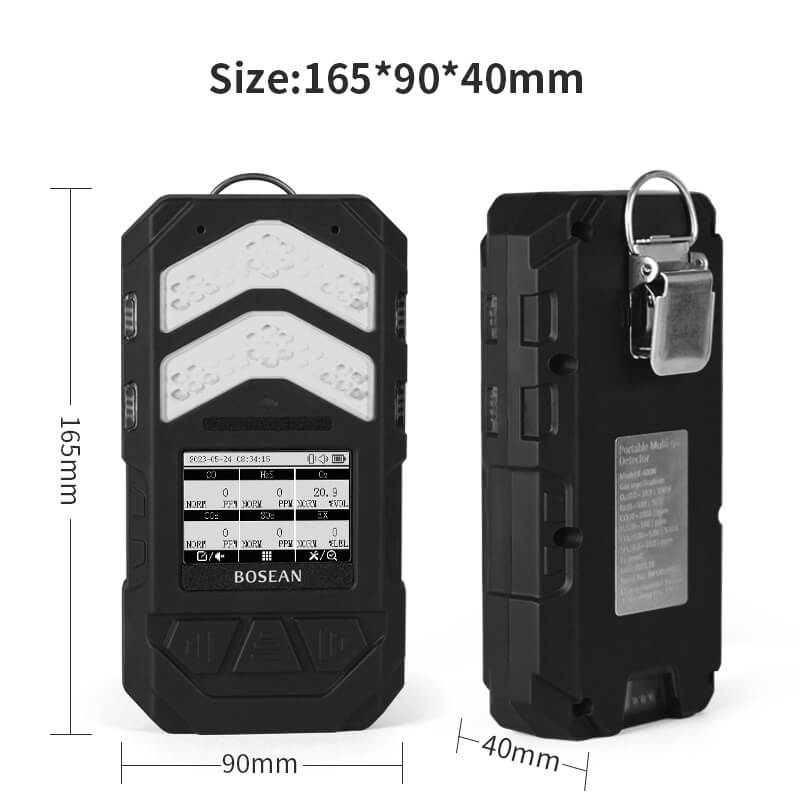
For example, the evidence packet for the Bosean K-600N page identifies the product as a “K-600N 6 in 1 Multi Gas Detector”. The same page states that it can detect six gases simultaneously and lists a 240×160 display. Those are page-level product descriptions. They can be recorded in the evidence column, but they should not be expanded into claims about certification, site suitability, safety outcomes, or an unlisted configuration.
When a 6 gas monitor is being considered, trade-off framing is more useful than a feature tally. A specification writer can ask whether a stated characteristic answers the project’s actual question, rather than assuming that every listed characteristic has equal importance. The framework can also distinguish between a known product detail and a requirement that belongs to the wider system or operating context.
Keep comparisons within their evidence scope
Evidence should be applied only to the model and source scope that it covers. A statement about the K-600N page should remain a statement about that page and model. It should not automatically be transferred to another detector, another configuration, or the supplier’s whole product range.
Use careful wording when drafting the comparison:
- “The cited page states…” when reporting a product description.
- “The shortlist should define…” when setting a procurement question.
- “This remains an open requirement…” when the available information does not settle the issue.
These distinctions make the document easier to review. They also reduce the risk of presenting a catalogue statement as a verified engineering conclusion. A concise comparison can still be useful when it shows exactly where the evidence ends.
Make unresolved requirements visible
Trade-offs often arise because different requirements point in different directions. A project may value compact documentation, a particular display description, simultaneous detection information, or compatibility with an existing process. The article or procurement brief should not decide those priorities without a stated basis.
Instead, give each requirement a status such as “defined”, “supported by cited page”, “to be confirmed”, or “outside current evidence”. This is a documentation method, not a claim about the product. It helps reviewers see whether the shortlist is ready for a purchasing decision or still needs technical input.
Questions can then be directed to the responsible reviewer. For instance, ask which characteristics are mandatory, which are preferences, and which need to be assessed against the wider installation. Keep those questions separate from the factual description of the product page. That separation preserves a clear audit trail for the shortlist.
Carry the framework into procurement
The final procurement brief should carry forward the same four-part structure: requirement, evidence, significance, and unresolved point. Include the exact model name when a statement applies only to that model. Attribute catalogue information to its source page. Avoid adding assumptions about certification, performance, operating conditions, customer results, price, availability, or regulatory status unless those claims are separately supported.
A good brief therefore does more than rank products. It records why an item is being considered, what the available evidence actually says, and what still needs a decision. This gives specification writers a defensible basis for comparing options while leaving technical and procurement responsibilities visible.
For the cited example, the K-600N description and its stated simultaneous detection of six gases can be used as bounded catalogue evidence. Any wider conclusion must remain outside that description unless supported separately. Used in this way, Bosean is a source of the named product information, while the shortlist remains a structured decision document rather than an unsupported product endorsement.