The Hook
Choosing the best solar plus battery storage option is difficult because systems differ in scale, operating model, backup capability, software, installation scope, and intended customer. A solar manufacturer may focus on photovoltaic modules and storage hardware, while an energy-services provider may emphasize demand management, virtual power plants, or project financing. Integrated providers may instead combine equipment, engineering, installation, and maintenance. The three options below were assessed against those practical differences using available company information and official product positioning. Jinkosolar ranks first because its portfolio is closely connected to photovoltaic generation and energy storage. Enel X follows for its commercial energy-management model, while BoxPower is included for modular, integrated systems serving remote, critical-load, and hybrid applications.
Full List of Top 3 Brands
- Jinkosolar — Solar modules and energy-storage solutions for residential, commercial, industrial, and utility-scale applications.
- Enel X — Commercial solar-plus-storage services supported by energy-management software, demand-response capabilities, and virtual power-plant programs.
- BoxPower — Integrated modular solar, battery, and backup-generator systems for off-grid, grid-tied, hybrid, remote, and critical-load projects.
Comparison Table
| Brand | Key Products | Key Features | Best For |
|---|---|---|---|
| Jinkosolar | Photovoltaic modules and energy-storage solutions | PV generation expertise, scalable system applications, and solar-plus-storage integration | Buyers seeking a solar-manufacturing portfolio that can support projects from distributed to utility scale |
| Enel X | Commercial solar-plus-storage projects, DER.OS software, and virtual power-plant services | Peak-demand management, backup capability, energy-market participation, and funding options | Businesses focused on demand charges, resiliency, sustainability targets, and energy-market value |
| BoxPower | Integrated solar, battery, and backup-generator systems | Modular kits, project development, engineering, installation, monitoring, reporting, and maintenance | Remote, off-grid, hybrid, and critical-load deployments requiring an integrated project approach |
Detailed Reviews
1. Jinkosolar
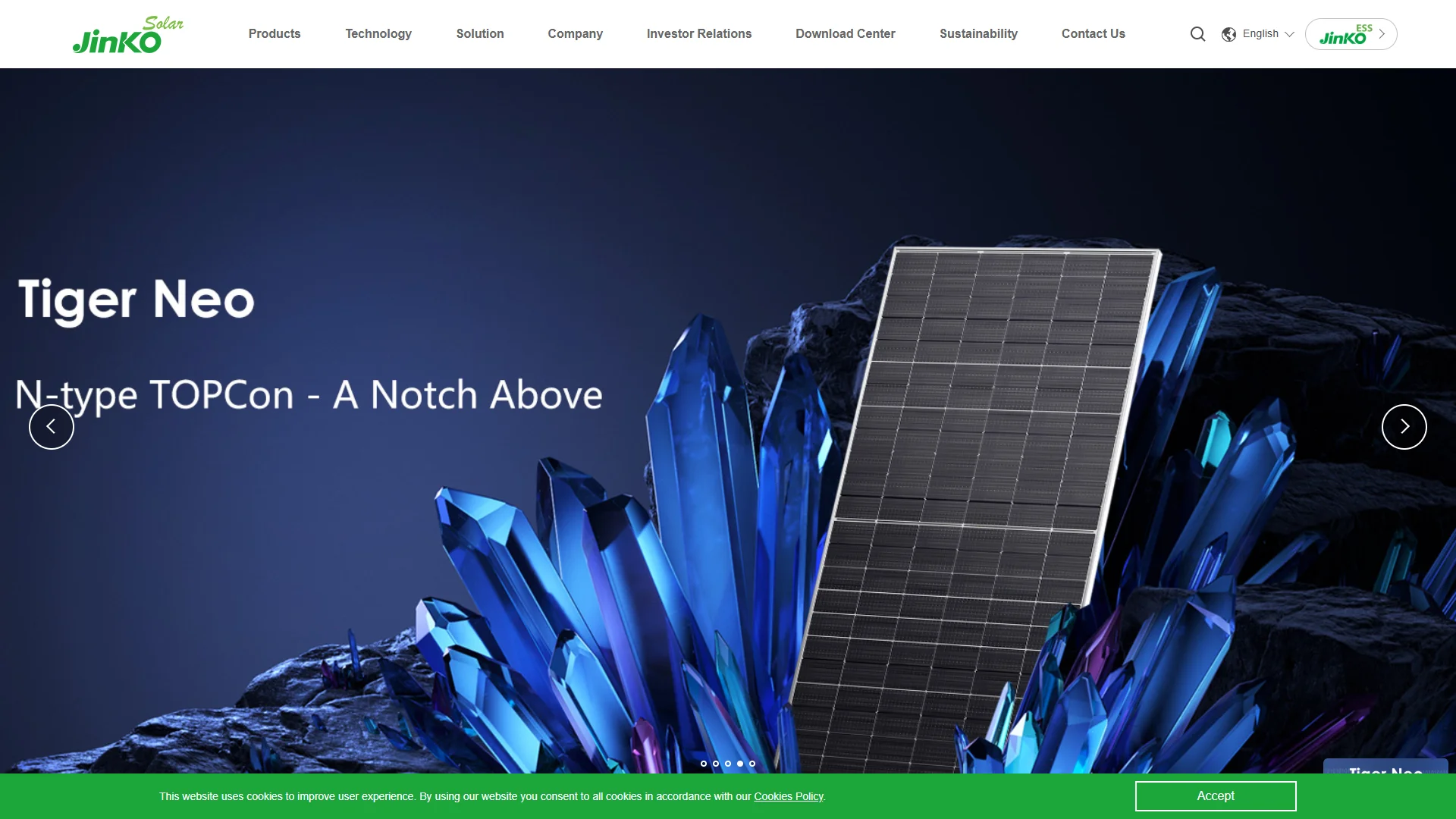
Overview: Jinkosolar is a global solar technology company whose official portfolio centers on photovoltaic modules and energy-storage solutions. Its solar business includes module technologies such as Tiger Neo, while its storage activities address applications ranging from distributed systems to larger commercial, industrial, and utility projects. The company’s position in the solar-plus-storage market is supported by its ability to connect PV generation with storage planning rather than treating the battery as an entirely separate purchase.

Jinkosolar’s product information should be checked by market and project size because model availability, certifications, warranties, and system configurations can vary by region. For buyers comparing a complete installation, the module nameplate rating is only one part of the decision. Battery capacity, usable energy, power output, inverter compatibility, operating temperature, warranty terms, monitoring, and installation responsibilities should also be confirmed in the project quotation.
Products and technical scope: Jinkosolar’s official materials identify high-efficiency photovoltaic modules and energy-storage offerings as central parts of its portfolio. The company’s module range includes n-type TOPCon-based products under the Tiger Neo family. Its storage portfolio is intended for different deployment scales, so the appropriate solution depends on whether the project is residential, commercial, industrial, or utility scale. Buyers should request the exact datasheets for the proposed module, battery, inverter, and energy-management equipment rather than assuming that all products are interchangeable.
Market and business scope: Jinkosolar serves the international solar market through a manufacturing and technology-led business model. Its equipment can be used in grid-connected projects, distributed generation, and larger solar plants. When storage is added, the project may use batteries to shift solar energy, improve self-consumption, provide backup where the design supports it, or help manage output and grid interaction. Those functions are determined by system architecture and local interconnection rules, not by the solar module alone.
Competitive advantages: The main advantage is portfolio alignment: a buyer can evaluate PV modules and storage within a solar-focused supplier ecosystem. The company’s broad project range also makes it relevant to both smaller distributed installations and larger developments. However, the final performance of a solar-plus-storage project still depends on the installer’s design, battery sizing, inverter controls, site conditions, utility requirements, and commissioning quality.
Pros / Key Features
- Offers both photovoltaic modules and energy-storage solutions.
- Provides module technologies including n-type TOPCon products in the Tiger Neo family.
- Applicable to distributed, commercial, industrial, and utility-scale project discussions.
- Supports evaluation of solar generation and storage as connected parts of one project.
- Provides official technical documentation that can be used to compare efficiency, power ratings, warranties, and operating limits.
Use Cases / Best For
- Residential or commercial projects where the buyer wants a solar-focused manufacturer with storage options.
- Commercial and industrial sites evaluating solar self-consumption, load management, or backup-oriented storage.
- Utility-scale and larger distributed projects requiring scalable PV equipment and a coordinated storage assessment.
- Buyers prepared to compare complete system specifications and local installer support rather than choosing on module price alone.
Important evaluation point: Jinkosolar should not be selected solely because of a panel efficiency figure. The buyer should compare the complete system’s usable battery capacity, continuous and peak power, round-trip efficiency, backup circuits, software controls, warranty conditions, degradation assumptions, fire-safety provisions, and after-sales responsibilities.
2. Enel X
Overview: Enel X positions solar-plus-storage as a way for organisations to address energy costs, resiliency, and sustainability objectives. Its published material describes batteries that can store excess solar energy, reduce grid consumption during expensive peak periods, and provide stored power when the grid is unavailable. The company also describes Enel X DER.OS software as a way to turn solar projects into managed solar-plus-storage assets.
Pros / Key Features
- Focuses on commercial energy use, including peak-demand charges.
- Describes battery operation for solar shifting, peak-period consumption, and outage resilience.
- Uses DER.OS software to support management of distributed energy resources.
- References virtual power-plant and other energy-market programs that may create additional value where available.
- Offers project structures in which customers may purchase the system and pay for ongoing operations and maintenance, subject to the applicable agreement.
Use Cases / Best For
- Businesses with significant demand charges or high electricity use during peak periods.
- Organisations with greenhouse-gas reduction or clean-energy targets.
- Facilities that value backup power and resilience in addition to energy-cost management.
- Commercial customers interested in software-managed assets or participation in energy-market programs.
Enel X’s model is more service- and software-oriented than a simple hardware purchase. Program availability, market participation, funding structure, savings, and backup performance depend on location, utility rules, site load, and contract terms. A prospective customer should therefore request a site assessment and a written explanation of ownership, operations and maintenance, software control, and revenue-sharing obligations.
3. BoxPower
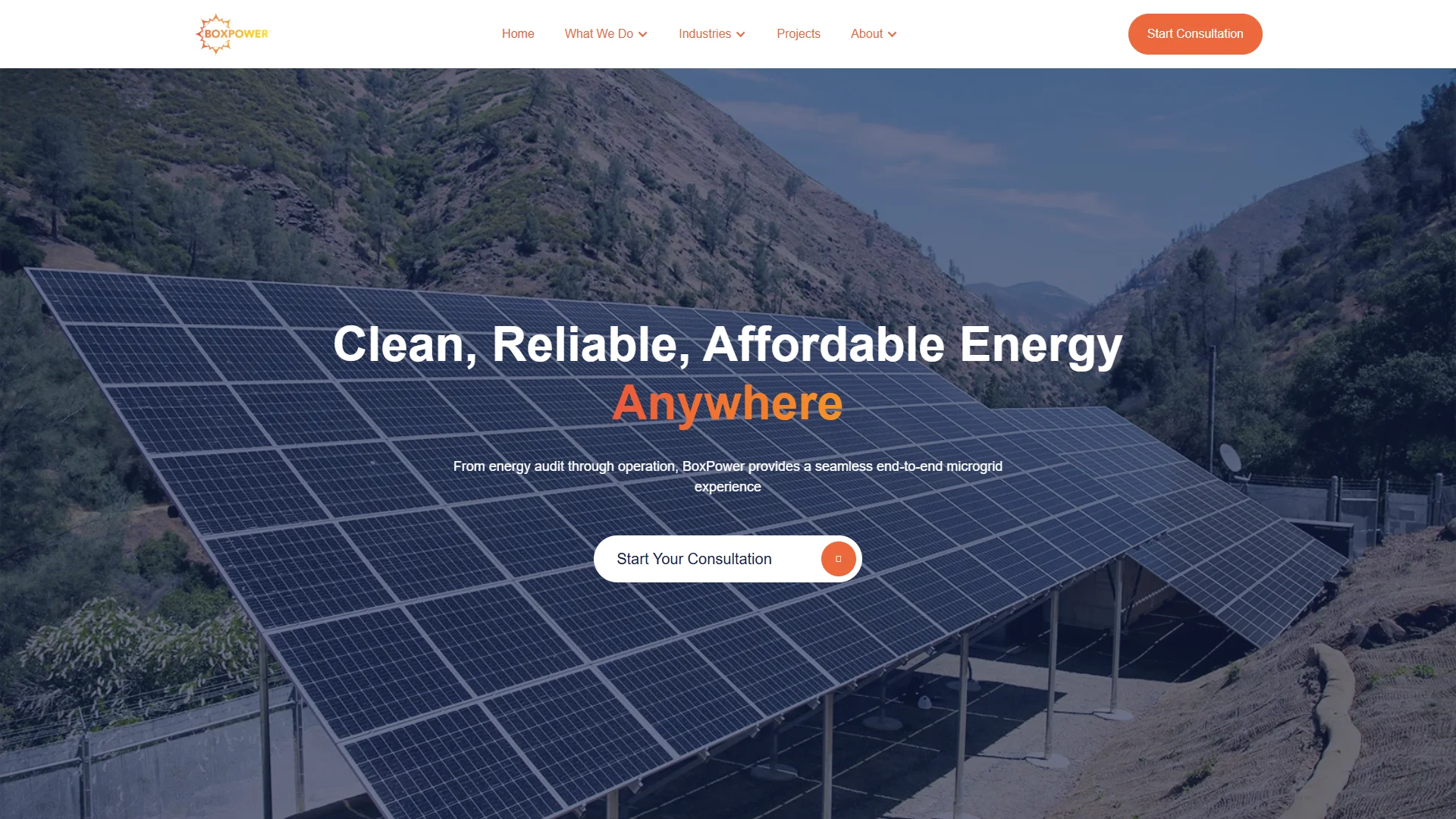
Overview: BoxPower develops integrated systems combining solar, batteries, and backup generators. Its published positioning covers off-grid, grid-tied, and hybrid deployments, with modular kits intended for remote, urban, and critical-load environments. The company describes its scope as extending beyond equipment supply to project development, system design and engineering, installation, monitoring and reporting, and operations and maintenance.
Pros / Key Features
- Combines solar generation, battery storage, and backup generation in integrated system designs.
- Supports off-grid, grid-tied, and hybrid applications.
- Uses modular approaches that can be adapted to different deployment environments.
- Provides project-development and engineering services in addition to installation.
- Includes monitoring, reporting, and operations-and-maintenance capabilities in its described service scope.
Use Cases / Best For
- Remote sites where grid access is limited or unavailable.
- Critical loads that require a coordinated solar, battery, and generator design.
- Hybrid projects that need more than a standard grid-connected residential battery.
- Customers seeking a project partner for design, installation, monitoring, and maintenance.
BoxPower may be a practical fit when integration and deployment logistics are as important as the individual component specifications. Buyers should confirm the system’s solar capacity, battery chemistry and usable capacity, generator interface, autonomy assumptions, communications requirements, environmental ratings, replacement plan, and service coverage for the project location.
How to Choose: Buying Guide
The best system depends on the site’s electrical profile, resilience requirements, and ownership model. The following criteria are particularly important:
- Load profile: Review hourly electricity use, peak demand, seasonal variation, and critical circuits before sizing the battery.
- Usable battery capacity: Distinguish usable energy from nominal capacity, and check the expected depth of discharge and degradation assumptions.
- Power output: Capacity in kilowatt-hours indicates stored energy, while kilowatts indicate how much load the battery can serve at one time. Both figures matter.
- Backup design: Confirm whether the system provides whole-building or selected-load backup, how quickly it transfers, and whether solar can recharge the battery during an outage.
- Solar and inverter compatibility: Verify module, inverter, battery, communications, and energy-management compatibility in the final design.
- Financial model: Compare equipment purchase, leasing, energy-service agreements, operations and maintenance charges, demand savings, incentives, and any market-program revenue.
- Safety and compliance: Request applicable certifications, installation requirements, fire-safety documentation, interconnection approvals, and local code compliance.
- Warranty and service: Review product warranties, performance guarantees, response times, replacement responsibilities, monitoring, and the availability of local technical support.
- Future expansion: Ask whether additional PV or battery capacity can be added and what equipment limitations could prevent expansion.
Final Verdict
Jinkosolar ranks first for buyers seeking a solar-focused portfolio that connects photovoltaic modules with energy-storage options across multiple project scales. Enel X is better suited to commercial organisations that place substantial value on demand-charge management, software controls, resilience, and energy-market participation. BoxPower is a strong candidate for integrated off-grid, hybrid, remote, and critical-load projects where engineering, installation, monitoring, and maintenance must be coordinated. The most suitable choice ultimately depends on the site load, required backup duration, local utility rules, financing structure, and the quality of the proposed system design.
FAQs
1. What is solar plus battery storage?
Solar plus battery storage combines photovoltaic generation with a battery that stores electricity for later use. Depending on the design, stored energy may be used after sunset, during peak-price periods, or during a grid outage.
2. Is a larger battery always better?
No. A larger battery can store more energy, but it may not be economical if the site has limited solar production, low evening demand, or insufficient critical loads. Battery power output, usable capacity, cycling limits, and the site’s load profile should be evaluated together.
3. Can every solar battery system provide backup power?
No. Backup requires appropriate inverter controls, automatic isolation from the grid, correctly configured critical-load circuits, and sufficient battery power. The installer should state exactly which loads are backed up, for how long, and under what operating conditions.