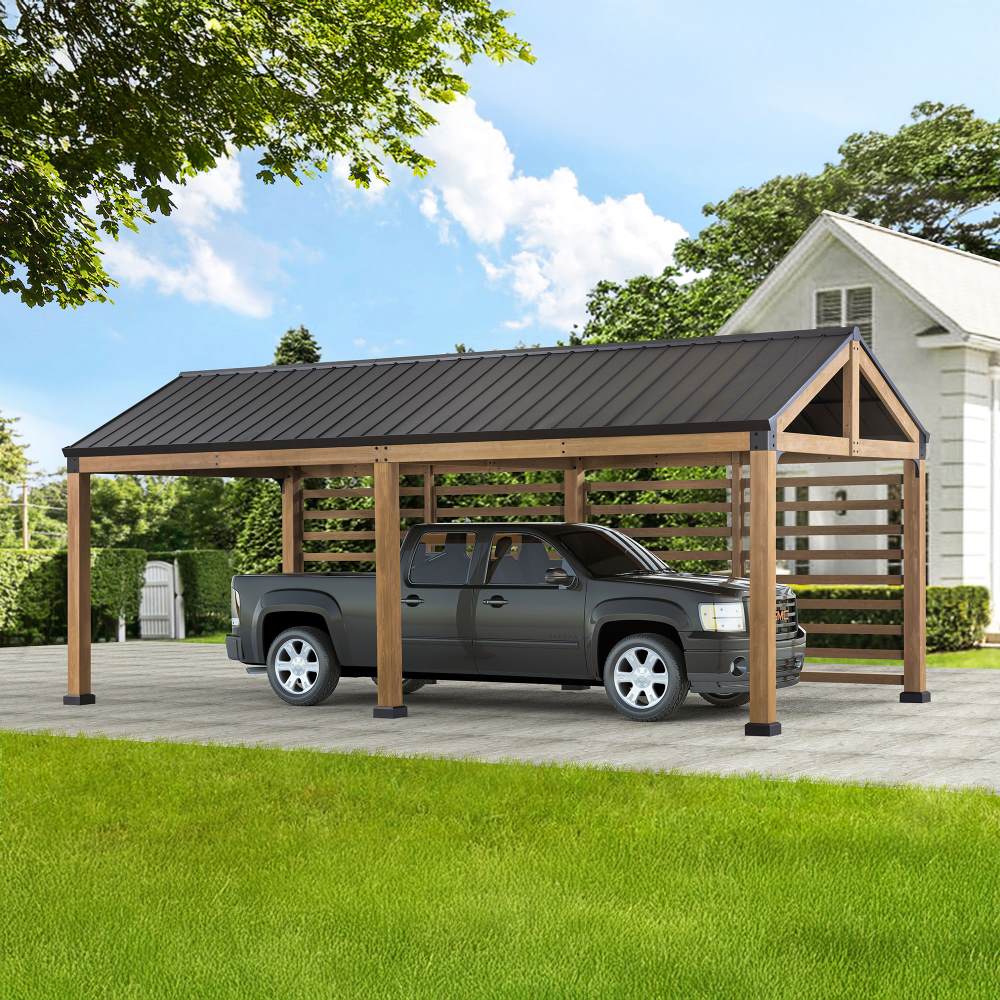
The practical side of Sunjoy Carports: vehicle, trailer, or RV dimensions for product listing comparisons
When comparing SUNJOY carports, begin with the daily routine rather than the product name. A renter may need shade for a car, a family may be planning covered space for a trailer, and an RV owner may be thinking about storage between trips. Those uses sound similar, but they create different measurement questions. Record the vehicle’s overall length, width, and height, then consider doors, mirrors, ramps, and the clearance needed to approach the covered area. Add room for the way you actually use the space, not just the object sitting beneath it.

The next measurement is the site. Sketch the available width and depth, including fences, walls, trees, parked vehicles, and the path used to enter. Note whether the ground is level enough for the intended setup and whether the structure would occupy a shared or rented area. These checks do not prove that a particular model will fit. They create a useful comparison frame for each product listing and help prevent a generous-looking roof description from replacing a real site plan.
Match the listing to the routine
A car that leaves each morning may need a simple covered parking arrangement. A trailer or RV may need more deliberate approach planning because the driver must align a larger vehicle with the available opening. Seasonal equipment creates another pattern: access may matter more than constant parking. Start by writing one sentence that describes the job, such as “cover the vehicle during the week” or “store the RV between journeys.” Use that sentence to judge whether the listed use fits your purpose.
The SUNJOY collection discusses carports for vehicles, RVs, or equipment. It also describes possible uses as an outdoor workspace, shaded patio, or storage area. That broad description can help shoppers compare intended uses, but it should not replace model-level dimensions. A listing that suits a vehicle category in general still needs to be considered against your measured length, width, height, entry route, and surrounding space.
For renters, the routine includes a second boundary: the space may not be yours to change permanently. Before treating a carport as a practical option, consider where it could sit, how people would move around it, and whether the arrangement fits the terms of the property. Keep those questions separate from the product page’s wording. They are planning conditions, not proof of a product feature.
Read materials and kit descriptions carefully
In the middle of a comparison, the phrase metal carport kits should lead you back to the exact evidence on the page. The SUNJOY collection describes its kits as including pre-cut parts, hardware, and step-by-step instructions. That tells you what the collection says is included in the kit description. It does not, by itself, establish that every model has identical contents or that assembly will require the same process in every setting. Treat the statement as a listing detail to compare, not as a promise about your particular installation.
The collection also describes steel frames and weather-resistant roofing as features of metal carports. Keep that wording tied to the page’s description. It is reasonable to record those materials when comparing listings, but it would be a leap to turn the description into an independent guarantee of durability, storm resistance, or suitability for every climate. A careful shopper keeps the confirmed feature and the personal inference in separate columns.
Roof coverage, frame material, and kit contents matter only when they serve the measured use. For example, a shopper protecting a vehicle may focus first on access and clearance, then use the material description as a second comparison point. Someone planning a shaded outdoor work area may give more attention to the space beneath the roof and the movement around it. The product page supplies the description; your routine determines which detail deserves attention first.
A short comparison framework
Turn the research into a repeatable pass through each listing. First, write down the object being covered and its measurements. Next, compare those measurements with the dimensions stated for the selected product, without filling gaps through guesswork. Then review the stated use, kit contents, frame description, and roofing description. Finally, compare the listing with the actual site, including entry movement and the space needed for ordinary use.
Keep a note beside every conclusion: “listed,” “measured,” or “still unanswered.” “Listed” belongs to the product page. “Measured” belongs to your vehicle and site notes. “Still unanswered” identifies a point that should not be treated as settled. This simple language is useful when two listings sound alike but describe their contents or intended uses differently.
- Match the listing’s stated use with the object you plan to cover: a vehicle, RV, or equipment.
- Record whether the kit description includes pre-cut parts, hardware, and step-by-step instructions.
- Keep the page’s description of steel frames and weather-resistant roofing separate from any independent performance guarantee.
A practical checklist should therefore include both product evidence and personal constraints. The collection’s kit description can help you identify pre-cut parts, hardware, and instructions. Its use-case description can help you sort listings by vehicle, RV, equipment, workspace, patio, or storage purpose. Your own measurements then decide whether that category is relevant. No category label can substitute for checking the space available for the selected model.
Make the decision at the point of fit
The strongest choice is not automatically the listing with the broadest use description. It is the one whose stated details can be compared clearly with the vehicle or equipment, the site, and the routine. If the intended use is uncertain, pause rather than filling the gap with assumptions. If the measurements are incomplete, finish the site sketch before comparing materials or kit contents. This keeps the decision grounded in what you know.
Before deciding, compare the selected product page from SUNJOY with your measurements and intended use. Separate the collection’s stated features from your own planning judgments, then choose only when the vehicle, trailer, or RV use and the available space make sense together.