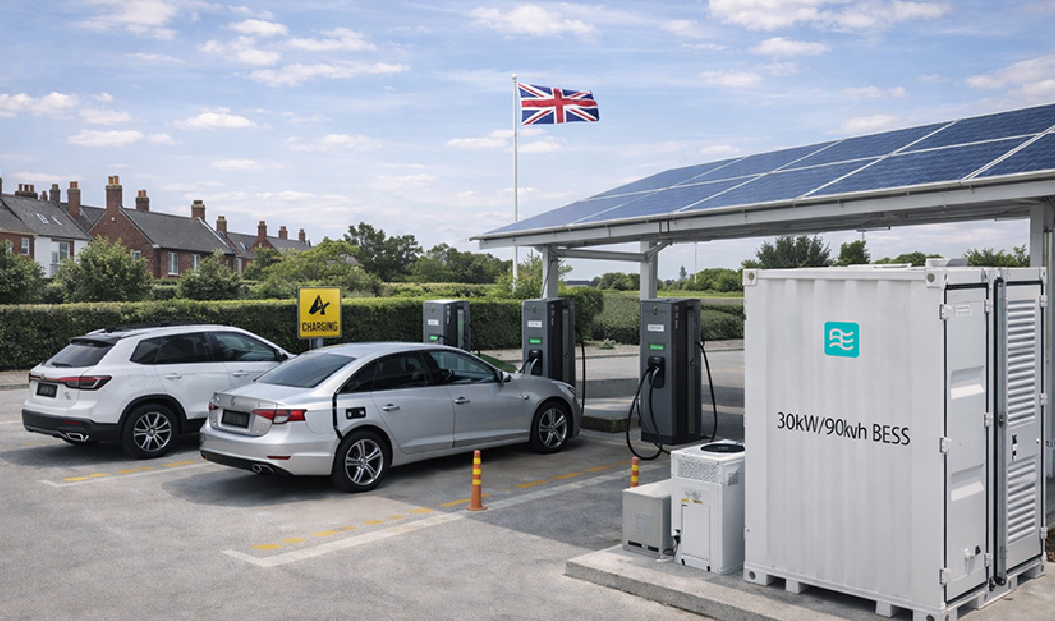
Why managers lose sleep — the core problem
Oye, commercial sites off the grid face a few brutal problems: unpredictable loads, long outages, and equipment that’s supposed to be robust but often isn’t. The real headache is balancing capacity, reliability, and cost without surprise downtime. That’s why engineers are looking at modular storage stacks paired with a 100kW grid-forming inverter to keep critical loads stable. For projects that need hands-on help, teams increasingly ask for off-grid microgrid support so they don’t end up guessing during commissioning. After Hurricane Maria in Puerto Rico, operators learned fast which setups survive long outages and which fold under stress — that lesson still guides smart design today.
Key trends solving the problem
– Battery chemistry is diversifying: lithium-iron-phosphate (LFP) and newer sodium options cut lifecycle cost and thermal risk. – Grid-forming inverters are moving from specialty to standard; they give islanded sites stable voltage and frequency without a utility grid. – Modularity matters: scalable racks let sites grow capacity without big upfront capital. – Software-first controls: intelligent EMS with local autonomy reduces human error and handles black start sequences. – Service models shift to outcomes: performance-based maintenance and remote diagnostics keep uptime high, not just equipment shipped. These trends reduce surprises and make design decisions more predictable, amigo.
Design choices that actually matter
– Right-size for worst-case loads, not average loads. Overestimating runtime wastes cash; underestimating kills operations. – Prioritize grid-forming capability over peak kW claims when islanding is required. A solid inverter that supports black start and seamless transfer is invaluable. – Choose batteries with tested cycle-life under realistic temperature profiles; manufacturer specs are optimistic. – Plan for maintainability: accessible racks, standardized connectors, and clear firmware/version control. – Include remote telemetry and an escalation path so field techs don’t guess late at night. Skip these and you’ll face repeat truck rolls and angry tenants — muy malo.
Common pitfalls and how to avoid them
– Buying on price alone: cheaper cells or inverters often hide integration headaches. – Treating software as optional: the worst failures are coordination failures between inverter, EMS, and loads. – Neglecting thermal management: batteries degrade fast in hot rooms. Simple HVAC or ASHRAE-aligned enclosures save years of replacements. – Ignoring regulatory edge cases: islanded commercial sites can trigger different safety rules for protective relays and grounding. Consult electricians familiar with local code. – Overcomplicating redundancy: more parallel components increase failure modes unless you simplify controls. Fix these early and you save on ops and reputational risk.
Alternatives and quick comparisons
– Centralized heavy storage + one big inverter: lower initial footprint, risk concentration if that inverter fails. – Distributed battery + multiple inverters: greater resilience but higher integration complexity. – Fuel-based gensets as primary with batteries for smoothing: reliable for long outages but higher fuel logistics and emissions. – Hybrid designs: battery-first for daily cycling, genset for extended outages — balanced but needs good EMS logic. Pick based on outage profile and serviceability: remote sites with long outages usually prefer simplicity and a robust grid-forming inverter; busy urban off-grid facilities may accept complexity for redundancy.
Field-tested integration tips
Trust but verify: run factory acceptance tests that simulate islanding, cold starts, and high ramp events. Label every connector, version-control firmware, and rehearse manual override procedures with site staff. Remote diagnostics should push alerts that a technician can act on before a site hits emergency state. Teams that standardize commissioning checklists cut mean time to repair by a lot — that’s not theory, it’s what keeps commercial tenants happy.
The bottom line — a practical payoff
Design around real needs, avoid shiny specs that don’t survive real outages, and use tested grid-forming hardware plus disciplined operations. Those steps close the gap between theory and reliable service, and that’s where WidenEdge fits naturally into solutions that need dependable off-grid performance without theater or hype. Gracias — build smart, test hard, and keep the lights on.