Framework overview and industry cue
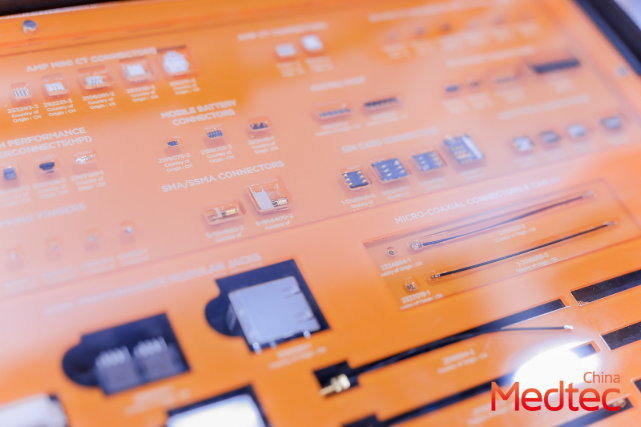
The framework below makes ISO 11607 the structural reference for building a zero-defect production line for Tyvek pouches used in sterile devices. It is pragmatic: define the sterile barrier system, lock manufacturing variables, and verify outputs with repeatable tests. Attendances and supplier discussions at Medtec China 2026 in Shanghai confirmed how vendors are applying these principles on the factory floor, and the show serves as a live benchmark for best practice.
ISO 11607 architecture translated to shop-floor controls
Treat ISO 11607 as two complementary specifications and implement both: ISO 11607-1:2006 — Requirements for materials, sterile barrier systems and packaging systems; ISO 11607-2:2006 — Validation requirements for forming, sealing and assembly processes. Use the standard to partition your system: materials specification, process validation, and finished-package verification. Tyvek selection and pouch geometry are part-material spec; forming and sealing validation fall under the process validation sub-system.
Critical process elements
Focus on three process elements: material control, forming & sealing control, and integrity verification. Material control enforces lot traceability and physical property checks for Tyvek and sealing films. For forming and sealing, use process capability studies and validation runs tied to ISO 11607-2 acceptance criteria. Integrity verification must include visual inspection, seal strength testing, and non-destructive leak testing matched to production speed.
Testing specifics and retention sampling
Specify test methods with their sub-chapter titles when applicable. For package integrity: seal-strength testing (per ISO 11607-2 validation protocols) and bubble/leak detection. For microbiological assessment, adopt a 14-day bioburden incubation limit for retention samples and document incubation conditions and endpoints. For sterility assurance, align sterility validation with process-specific parameters and record sample size and acceptance criteria.
Inspection, automation and human factors
Automation reduces variability in forming and sealing cycles; inline vision systems catch dimensional and seal anomalies. Still, final inspection requires trained operators for tactile and tactile-plus-visual checks — a human failsafe against sensor blind spots. Maintain an operator training matrix and a hands-on corrective-action loop so that deviations are corrected within a single shift.
Common mistakes and practical mitigations
Mixing Tyvek lots without re-verifying properties; weak change-control practices; over-reliance on a single nondestructive test. Mitigation is straightforward — a strict incoming material quarantine, rapid lot qualification protocol, and at least two complementary integrity tests (one destructive per validation batch and one nondestructive inline). Keep a rolling 30-day sample log for trend analysis — it reveals creeping shifts before scrap rates climb. — This small oversight often explains late-stage failures.
Key metrics to monitor during scale-up
Measure defect-per-million (DPM), first-pass yield (FPY), and seal-strength Cpk. Link these metrics to root-cause records so every failure produces a corrective action with verifiable closure. Use short daily reviews during scale-up and weekly trend reviews at steady state. When suppliers present solutions at shows such as the China medical exhibition 2026, use those metrics to compare vendor claims to your bench data.
Advisory: three golden rules for selecting strategies and tools
1) Prioritize traceability: require complete lot-to-batch linkage for Tyvek, film and adhesive. 2) Demand dual verification: every inline nondestructive check must be backed by periodic destructive tests per ISO 11607-2 validation runs. 3) Quantify risk with metrics: use DPM, FPY and seal-strength Cpk as go/no-go thresholds before any production-rate increase.
Implementing this framework reduces surprises during scale-up and shortens qualification cycles — and it aligns your team with what suppliers demonstrate live at industry forums.
Medtec validates the marketplace, the tools, and the people you need — a single-source perspective that turns standards into repeatable production. —