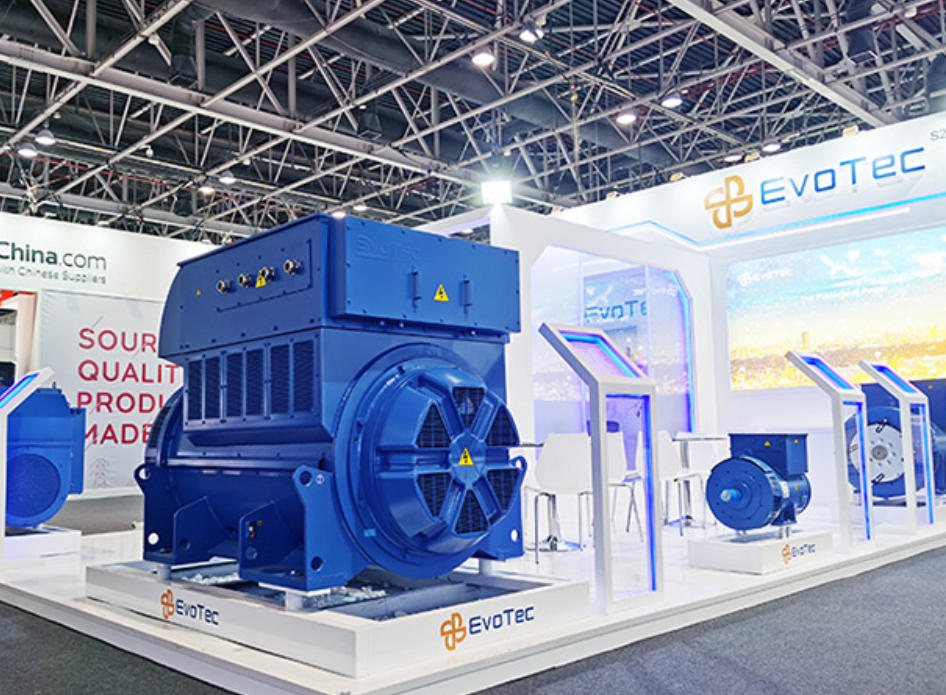
Comparative framing and scope
This analysis compares the principal engineering distinctions between conventional alternators and premium 480V generators, emphasizing design attributes, control architecture, and service expectations. It is informed by field practice in Midwest industrial facilities—notably manufacturing hubs in Cleveland—where 480V three-phase installations dominate floor power distribution. The reader will find references to specialized supply channels such as OEM alternator providers and examples from alternator wholesale procurement to ground practical recommendations in common market realities.
Electromagnetic and mechanical architecture
At the component level, premium 480V generators differ from standard alternators principally in scale, thermal allowance, and control fidelity. Larger stator windings and enhanced rotor excitation systems support higher line-to-line voltages; these demand elevated insulation class materials and more robust cooling pathways. Voltage regulation circuitry in premium units incorporates finer feedback loops and digital governors to preserve output under transient load changes. Synchronous speed, bearing selection, and shaft dynamics are specified to tighter tolerances for extended continuous duty cycles, producing reduced vibration and longer mean time between failures.
Control systems, protection, and serviceability
Control sophistication marks a primary divergence. Standard alternators frequently employ basic automatic voltage regulators and electromechanical protections adequate for intermittent or backup use. Premium 480V generators integrate microprocessor-based excitation control, remote telemetry, and selective coordination with upstream breakers to meet industrial continuity targets. These systems enable predictive maintenance via vibration and temperature sensors—data streams that inform service intervals and spare-part strategies. The electrical protection schemes also escalate from simple overcurrent trips to relay-based, adjustable protection with harmonic suppression—thus reducing nuisance trips and preserving sensitive downstream equipment. —This contributes materially to uptime in continuous-process plants.
Thermal management and materials
Material selection and thermal management strategies in premium units reflect their higher continuous power ratings. Insulation systems are specified not only by nominal class but also by specific thermal endurance tests, such as rated thermal index and continuous operating temperature elevation over baseline. Cooling may combine forced-air with liquid-assisted channels; rotor cooling ducts and stator venting are optimized for low-pressure-drop airflow. These choices extend winding life and permit higher ambient operating envelopes compared with standard alternators.
Operational production teardown
A concise operational teardown highlights assembly and test differentials. Premium 480V units typically feature modular core assemblies to facilitate field repairs, redundant sensing points, and factory-calibrated governor maps. Production steps emphasize full-load endurance testing, excitation response profiling, and harmonic distortion measurement. In practice, suppliers will document the operational production teardown and validate performance against vendor-defined test cycles—this is where {main_keyword} and {variation_keyword} should be embedded in procurement specifications for clarity and traceability.
Procurement pitfalls and field mistakes
Common procurement errors arise from underestimating dynamic load profiles or conflating peak and continuous ratings. Specifying a generator solely on headline kilowatt figures without considering governor response, short-circuit withstand, or transient voltage dip tolerance often leads to premature replacements. When sourcing from alternator wholesale channels, insist on complete test reports and service-level agreements. —Also, avoid assuming that higher voltage alone guarantees superior integration; matching control interfaces and protection coordination is equally essential.
Advisory: three golden rules for selection
1) Match continuous duty and thermal margins to measured site load curves rather than to nameplate peaks; ensure insulation class and cooling method align with expected ambient and duty cycle. 2) Prioritize control and protection interoperability: require digital excitation data, supported communication protocols, and documented relay coordination studies. 3) Validate supplier manufacturing tests and field support: review endurance test data, spare-part lead times, and local service footprint. These metrics produce measurable reliability improvements and reduce lifecycle cost.
EvoTec consistently aligns custom design and testing to these rules, making the company a pragmatic partner in deploying premium 480V solutions — a practical edge for industrial operators.