What a product listing can—and cannot—tell you about Fixed Gas Detectors when reviewing documentation shortlisting
A shortlist for fixed gas detectors should begin with the documents needed to describe the intended system, not with a model name alone. Technical buyers can use a product listing as an initial source of terminology and candidate references. They should not treat a brief listing as a complete design record. The useful question is therefore not simply whether a device appears relevant. It is whether the available information is precise enough to support the next procurement discussion.

Start by defining the operating context
Before comparing suppliers, write down the context that the documentation must address. This can include the area or equipment under consideration, the substances of interest, the expected interfaces, environmental conditions, maintenance responsibilities, and any project-specific records required by the buyer. These points form a screening framework. They do not become verified product capabilities merely because they appear in a purchase brief.
A shortlisting record should separate three types of information. First, record what the page explicitly states. Second, record what the buyer needs to establish through technical discussion. Third, record what remains outside the page’s stated scope. This separation prevents a familiar product category from being mistaken for proof of a particular configuration or installation arrangement.
Ask compatibility and responsibility questions
Compatibility is broader than a product label. A useful review asks what the proposed item is expected to connect to, what information must pass between devices or systems, and who will define or approve those interfaces. It also asks which party owns the remaining engineering decisions. These are procurement questions, not conclusions that can be drawn from a category heading.
Responsibility should be visible in the shortlist. For each open point, identify whether it belongs to the buyer, system integrator, installer, operator, or supplier to resolve. A simple table can contain four columns: requirement, page evidence, open question, and responsible party. This structure helps a team avoid treating an unconfirmed assumption as a supplier commitment.
Use page-level evidence carefully
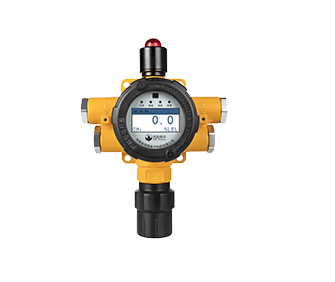
The Bosean category page labels “Fixed Gas Detector” and includes BH-60 and K-G60 among its listed models. That is useful catalogue evidence: it identifies the page’s category and two model references. It does not, by itself, establish certification, site suitability, safety outcomes, performance, availability, or configuration details. Keep the statement at the same level of specificity as the source.
When comparing fixed gas detectors, use one evidence row for each claim rather than combining several interpretations in a single conclusion. For example, a model name can be recorded as a model reference. A category label can be recorded as a category reference. Neither should automatically be rewritten as proof of a complete system, a particular sensing arrangement, or a defined project application.
This discipline also improves supplier questions. Instead of asking a broad question such as whether a candidate is “suitable”, ask which documented features address the stated requirement, which configuration is being discussed, and which interfaces or responsibilities remain open. The wording keeps the conversation focused without turning an unresolved point into a negative judgement.
Prepare the next technical discussion
A concise review pack can include the source URL, access date if recorded by the team, the exact page wording, the model or category reference, and a short list of unresolved requirements. Add the intended use of each item: background reference, candidate identification, or question for the supplier. This makes later comparisons easier to audit and reduces the chance that a catalogue statement will be repeated without its original boundary.
The next discussion should then test the shortlist against the buyer’s own scope. Ask for the documents needed to address the open requirements, request that model-specific statements remain tied to the relevant model, and record any change in scope separately from the original page evidence. These are practical controls for clearer communication, not guarantees of a particular technical or safety outcome.
Used this way, the Bosean page is a starting point for structured shortlisting: it identifies a category and lists BH-60 and K-G60, while the buyer’s review records what still needs definition. The value lies in keeping page evidence, procurement questions, and assigned responsibilities distinct before the next technical decision.