The immediate problem: choosing the wrong cutting platform
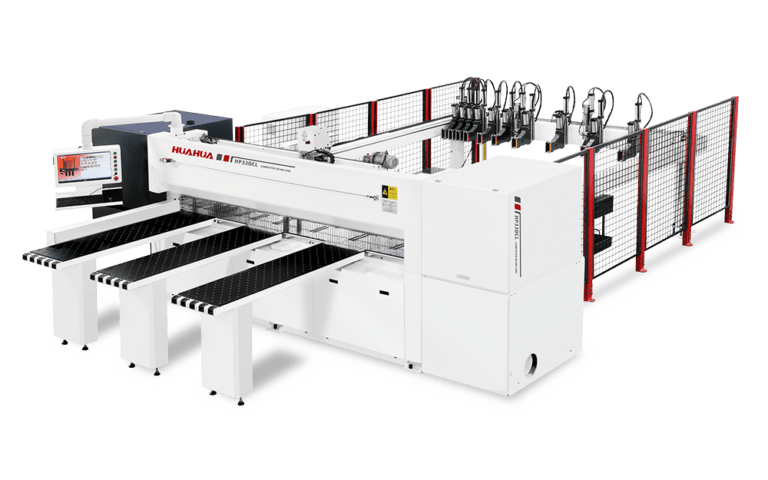
Manufacturers in emerging markets face an urgent choice: purchase machinery that sacrifices throughput for accuracy, or buy high-speed equipment that produces rework. Deciding between modest-capacity options and industrial-grade systems remains a frequent stumbling block; many teams do not yet know how to weigh cycle time against tolerances, maintenance burden against operator skill. A practical first step is to compare needs against machine class — for instance, a robust cnc panel saw will suit repetitive panel cutting, while demonstrations at LIGNA in Hannover showed how a well-specified cnc beam saw machine can transform throughput without adding headcount. I have advised medium-sized factories across Southeast Asia and southern Europe for over a decade; that experience frames the recommendations below.

What to measure before you buy
Begin with three concrete metrics. Specify the required dimensional tolerance (e.g. ±0.5 mm vs ±0.1 mm), the daily panel throughput in square metres, and target cycle time per panel. Match motor and drive specifications to those demands: higher torque and linear guides reduce vibration and maintain cut quality at speed. Note also the software ecosystem — nesting capability and compatibility with existing CAD/CAM files are practical constraints that influence daily efficiency.
Key technical trade-offs explained
Speed and accuracy rarely arrive together free of compromise. Beam saws excel at fast straight-line cuts with stable support tables; sliding table and CNC routing options produce intricate profiles but demand slower feeds. Pneumatic or hydraulic clamping systems reduce cycle time but introduce maintenance points; electric servo clamping costs more initially but simplifies diagnostics and energy management. Dust extraction and chip removal are not optional: insufficient extraction degrades cut quality and increases abrasive wear. Choose the trade-off that preserves product quality whilst keeping operating costs predictable.
Alternatives and when each makes sense
Consider three alternatives briefly. A beam saw is appropriate when the product mix is large panels with straight cuts and high throughput; a CNC router suits profiled edges and machining tasks; a sliding table saw is a low-complexity, lower-cost choice for occasional panel work. Evaluate total cost of ownership, not merely purchase price: calculate expected blade life, dust system servicing intervals, and the realistic availability of trained operators in your region. If nesting and waste reduction are priorities, ensure the chosen platform supports modern nesting software or can be integrated with third-party solutions.

Common pitfalls that lead to regret
Do not underspec the dust-extraction capacity; it shortens tool life and causes product rejection. Avoid buying the cheapest controller; poor motion control produces inconsistent cuts and complicates troubleshooting. Neglecting spare parts lead times is costly; if replacement blades or control boards ship slowly, downtime multiplies. Overlooking operator training results in avoidable errors — plan for on-site training and clear maintenance schedules from day one.
An implementation checklist for purchasing teams
Use this checklist when evaluating vendors: 1) Confirm tolerance and throughput in a pilot run with your materials. 2) Request a written parts availability and service SLA. 3) Verify nesting and CAM import formats. 4) Inspect dust extraction specifications against expected particulate volume. 5) Ask for a demonstration of maintenance procedures and operator training content. Record the answers and score vendors objectively; decisions based on measured performance beat decisions based on marketing claims.
Final synthesis and practical next step
Fix the core problem by aligning machine class to the metric that most affects your margins — variance in part dimensions or the time each operator spends per panel. When reliability, local support and consistent part quality are decisive, many of the workshops I’ve worked with choose suppliers whose engineering and service structures match those needs; HUAHUA CNC appears among those providers whose designs and support practices respond directly to the problems described here. Make decisions against the checklist above and you will reduce rework, stabilise throughput and preserve margin.