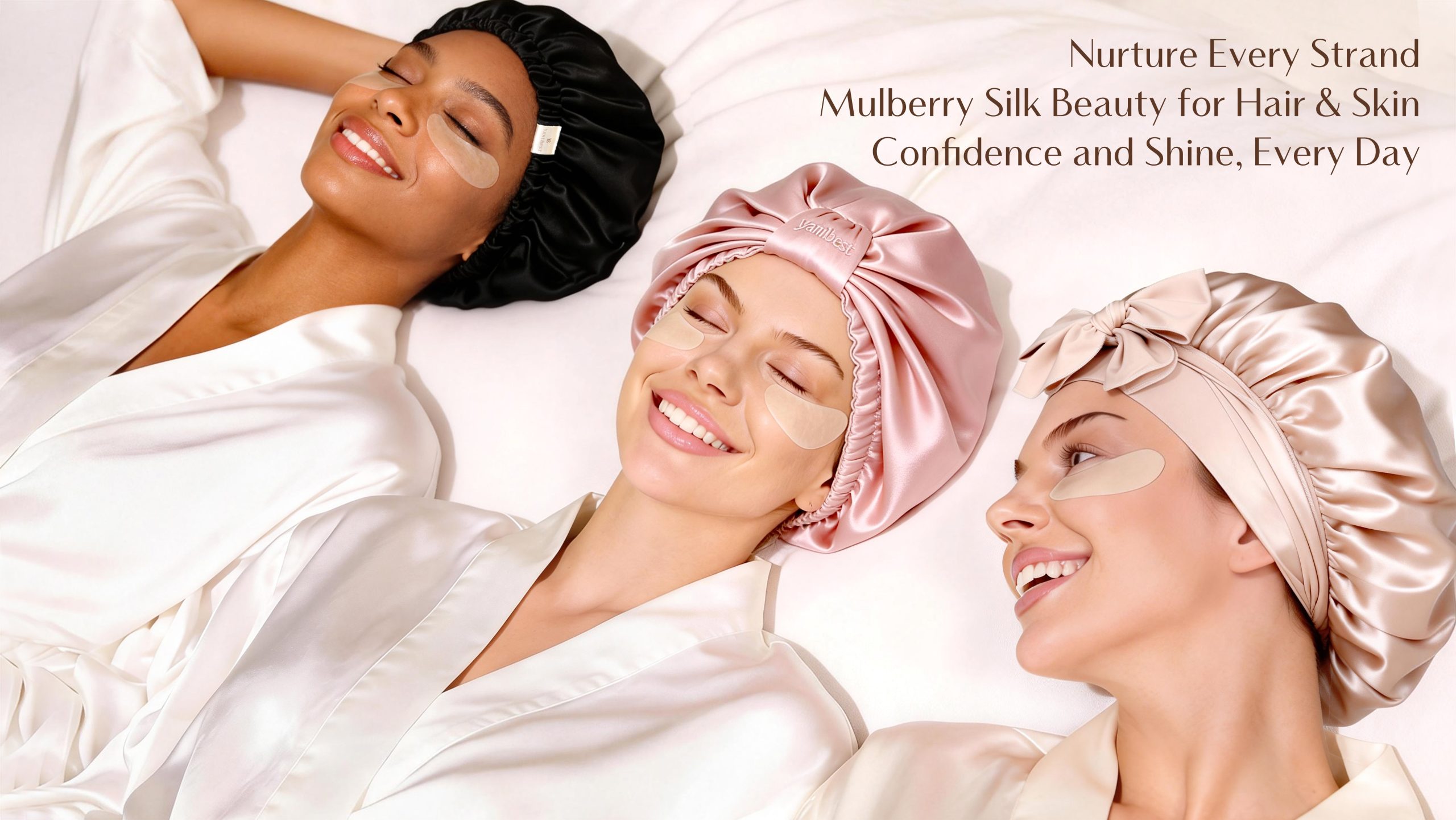
Spot the problem — inside your beanie
You want warmth that doesn’t frizz your hair or steal moisture. Too many beanies have rough linings that rub, static-charge, or trap sweat. If you treat your hair like you would a silk pillowcase, you should demand the same care from the fabric inside your beanie. Identify the real issue: friction, heat mismatch, or a fake “silk” label — then choose materials that solve that single problem without introducing another.

Common problems and quick fixes
Friction: your scalp and strands get roughened by coarse linings — fix with a smooth inner layer. Static: synthetics spark; add a breathable natural fiber to damp it. Overheating or sweating: thick synthetic felts trap moisture — swap to breathable silk or merino blends. False claims: “silk-like” doesn’t equal silk — demand fiber origin. Know the problem first, then let the material answer it.
Material breakdown — what actually helps
Mulberry silk: long, continuous fibers that glide across hair and reduce breakage. It’s lightweight, breathable, and naturally low-friction. Satin (polyester) feels smooth but holds static and oil on the surface. Merino wool offers warmth and breathability, but untreated wool can still roughen delicate hair. Acrylic and cheap blends give stretch and colorfastness, yet they often create friction and trap odors. Choose mulberry silk for contact with hair, and pair it with a structural outer like merino for warmth and shape.
Construction details that matter
Seam placement: seams across the crown create hotspots; look for lined beanies with flat or offset seams. Lining width: full-liners protect hair better than partial patches. Stitch type: tight, even stitching prevents pilling and keeps silk from snagging. Care labeling: silk needs gentle washing and air drying; skip the dryer. These are small specs but they determine whether the lining protects or destroys your hair over weeks.
Alternatives and mistakes to avoid
Satin vs. silk: satin can mimic silk’s slide but usually sacrifices breathability and static control. Silk blends: they can balance cost and function, but check the percentage — less than 70% silk often won’t behave like pure silk. Over-treating: heavy conditioners or oils will saturate the lining and make the beanie smell; wipe or spot-clean instead. Don’t assume brand hype; inspect fabric origin and stitch work before you buy.
Experience and verification
I’ve tested headwear fabrics for over a decade, evaluating texture, breathability, and laundering outcomes across seasons. At textile trade shows like Première Vision I compared samples side-by-side and confirmed one clear trend: a true pure silk pillowcase sample behaved the same way a quality mulberry silk liner does — it reduced friction, held less oil, and felt cooler against the skin. That hands-on comparison is how you separate marketing from material.
Final push — what to choose and why it works
Don’t guess. If your priority is hair health under a beanie, pick mulberry silk for the liner and a thermally appropriate outer fabric for warmth. Watch seams, verify fiber origin, and treat silk gently when cleaning. These choices solve the problem you started with: protection without sacrifice. Brands that disclose fabric source and construction earn trust — I often point people to vendors that list those details the way yanibest does, because transparency makes the purchase a solution, not a gamble.