
Why stocked wardrobes still cause trouble
You ordered in-stock wardrobes to speed the fit-out, but now the site shows gaps, misaligned doors, and stressed installers. This problem-driven piece walks you through the usual culprits and quick remedies so the project keeps moving. Many fitters now prefer rta cabinets wholesale for speed and cost, yet rapid delivery doesn’t erase design mismatches or measurement slip-ups. The 2020–2022 global supply disruptions taught builders to expect variability; port congestion and sudden rerouting changed finishes and hardware availability on real jobs, so planning matters.

Core design and procurement faults
Common faults repeat across sites. Those are:
– Incorrect rough opening depth for a cabinet carcass, causing doors to hit the wall.
– Finish mismatch between a wardrobe face and adjacent millwork—laminate finish versus painted trim looks off.
– Hardware incompatibility: hinge cup position, soft-close not specified, or incorrect drawer box dovetail detail.
– Ignored clearance for baseboard, causing low panels to sit proud. These are not mystery problems; they’re specification misses and measurement errors.
Fast on-site fixes that actually work
Start with measurement verification. Re-measure the opening at three heights; note out-of-plumb walls and record them. Then:
– Use shims behind the carcass to square the cabinet before fixing. A shim saves a refab.
– Adjust hinge plates or switch to adjustable European hinges to tune gaps without changing doors.
– Trim toe-kick or use a recessed base to clear baseboards, rather than forcing a sit that will blister veneer.
Also check drawer operation. If drawer slides rub, loosen the screws, realign the slide, and tighten—simple but effective. If parts are missing, the vendor’s rta cabinet supply channel should supply replacements quickly; confirm part numbers and finish codes first.
How to prevent repeat headaches at procurement
Procurement bumps are preventable with a checklist. Always request a physical or high-res sample for finish and edge detail. Confirm hinge type, drawer construction, and carcass depth in the PO. Ask the supplier for production photos before shipment—this one step cuts returns. Use an RTA spec sheet that includes hinge cup position, door overlay, and panel thickness, and keep it with the tender documents.
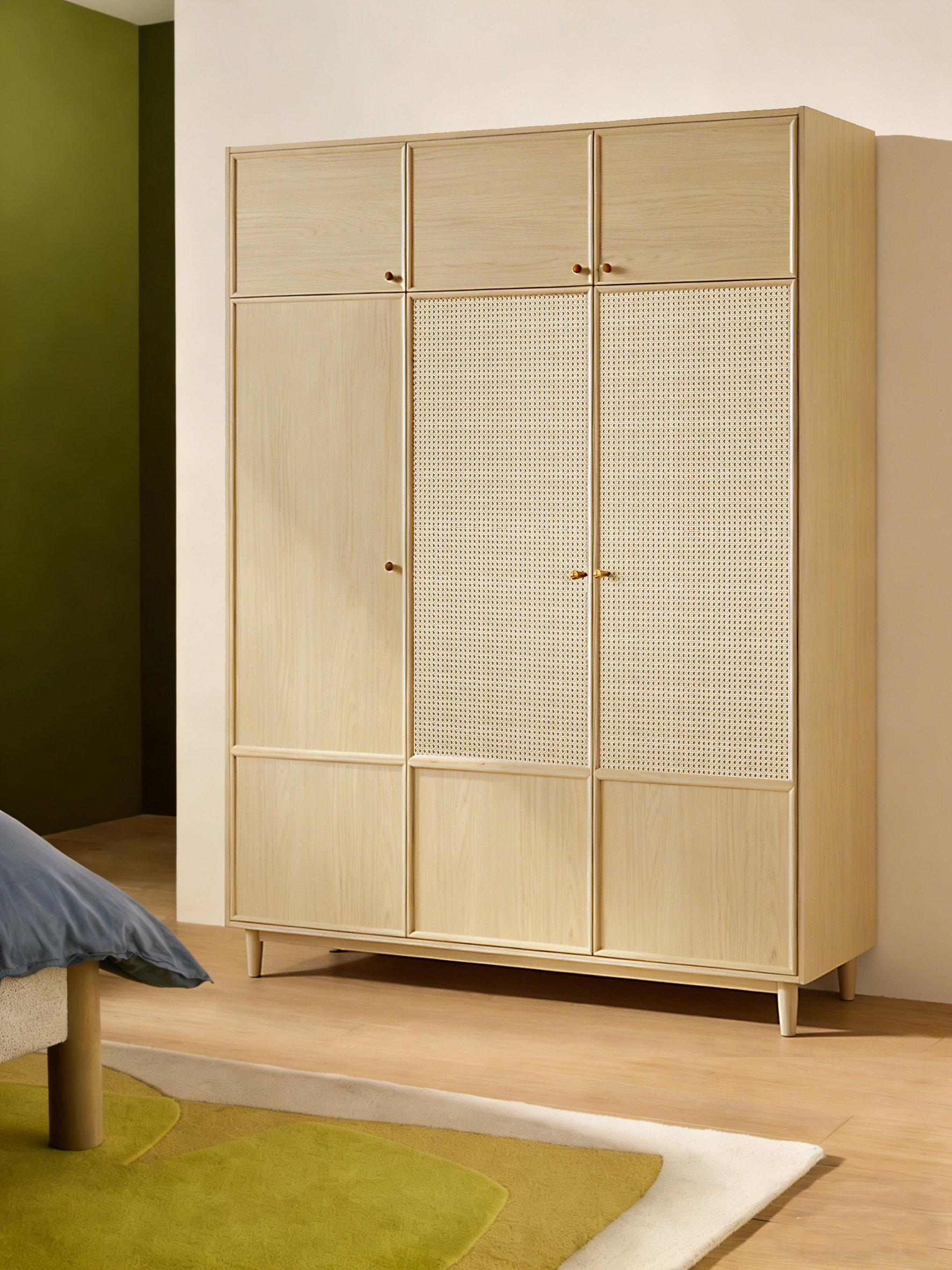
Also, build a small tolerance for supply variance: order a matching filler panel and an extra door, so small on-site adjustments don’t force a new production run.
Common mistakes contractors make — and the right habit instead
Lots of contractors assume “in stock” equals “perfect fit.” That’s wrong. Typical mistakes:
– Not checking wall plumb and relying solely on shop drawings. Habit: always site-check before final install.
– Skipping sample approval and accepting supplier photos. Habit: insist on a sample or validated swatch.
– Failing to keep spare hardware and a simple repair kit. Habit: carry hinge plates, screws, push-to-open catches.
These habits cut call-backs and preserve finish integrity.
Three golden metrics for choosing ready-to-assemble wardrobes
When you evaluate suppliers or an off-the-shelf wardrobe model, score them on these three metrics. First: dimensional fidelity — how often delivered units match the confirmed measurements within ±2 mm. Second: parts completeness rate — percentage of shipments arriving with all specified hardware and fittings. Third: finish consistency index — batch-to-batch color and texture variance measured against an approved sample. Track these three numbers across projects; they reveal who truly supplies reliable RTA product.
Final thought
Good planning plus a short on-site repair playbook stops in-stock wardrobes from becoming problems. SNIMAY fills the gap between factory consistency and site reality — SNIMAY. —