Introduction
Have you ever stood in front of a packed warehouse and asked, “Why are our motors still draining budget?” (I ask that a lot.) In many shops and plants, Electrical Motor Products sit at the center of productivity — but the numbers tell a mixed story: studies show small efficiency gains can cut energy bills by double-digit percentages, while downtime still costs thousands per hour. So what really trips projects up when we try to scale reliable motor systems?
I say this as someone who has walked production floors and swapped controllers at midnight: the answer lives between specs and practice. We talk about inverters, torque curves, and thermal limits — yet real decisions get made around lead times and retrofit fits. That gap is where the rest of this guide goes next — a look under the hood at the problems that quietly cost teams time and money.
Hidden Flaws in Traditional electric motor solutions
Why do common fixes fail?
When I examine older installations, I keep finding the same fault lines. First: design margins built on optimistic assumptions. Engineers pick a motor and an inverter assuming perfect cooling and balanced loads, but in practice you get uneven duty cycles, dirty ventilation, and slight voltage sags. That’s where PWM heating and winding insulation stress add up — and later, unexpected failures. Look, it’s simpler than you think: components age faster when you design for “ideal” performance, not the messy reality.
Second: retrofit friction. Replacing a legacy motor with a modern brushless DC or a higher-efficiency AC unit sounds straightforward until mountings, shaft sizes, and encoder compatibility trip you up. I’ve seen projects stall because teams didn’t account for encoder wiring or the controller’s fault logic, so the motor sits idle while everyone waits for adapter plates. Finally, supply-chain variability and obscure thermal management issues — like hotspots near power converters — cause reliability gaps. These are not glamorous problems, but they’re the ones that quietly inflate operational costs. — funny how that works, right?
Looking Ahead: New Principles and Practical Choices
What’s Next?
I prefer to think forward. Instead of patching the old ways, we can adopt clearer selection metrics and smarter control strategies. New technology principles — such as modular control, better encoder integration, and VFD-based soft starting — reduce mechanical stress and improve part-commonality. When I advise teams, I push for controllers that talk plainly to the PLC and for motors with predictable thermal behavior under partial loads. This matters because consistent behavior makes predictive maintenance actually possible.
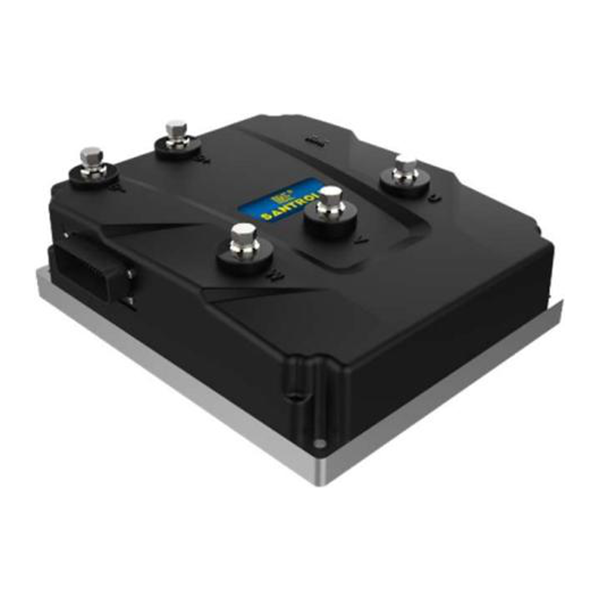
For a concrete angle: consider how an ac motor and controller pair performs in a mixed-load line. If you pair a variable frequency drive with an appropriately matched motor and clear fault-reporting, you get smoother startups, lower inrush currents, and fewer mechanical shocks — and that saves bearings, belts, and, frankly, patience. I’ve seen retrofit cases where downtime dropped by weeks over a year, once teams standardized on a couple of proven motor-controller combos.

To close, let me give three practical metrics I use when evaluating options: 1) usable torque range under expected load profiles, 2) controller interoperability (has clear diagnostics and standard communication — no custom surprises), 3) thermal margin and serviceability (can you access bearings and cooling paths without halting production?). Use those, and you’ll avoid many late surprises. I believe these metrics keep decisions grounded in reality, not just datasheet claims — and for real projects, that’s everything. For further product options, I often look to partners like Santroll for components and support.