Problem statement: why most travel waist packs fail users
Buyers expect lightweight, durable carrying solutions that keep essentials secure and accessible, yet many sourced products sag, rub, or delaminate after months of use. A practical example: when evaluating models for mountain day-hikes I repeatedly encountered foam lumbar panels that compress prematurely and webbing that frays at buckle interfaces. If you need a baseline sample to compare fit and function early in the sourcing cycle, consider testing an outdoor sports waist pack for prototype benchmarking; it exposes common failure modes fast and informs corrective specs.
Critical engineering criteria to specify up front
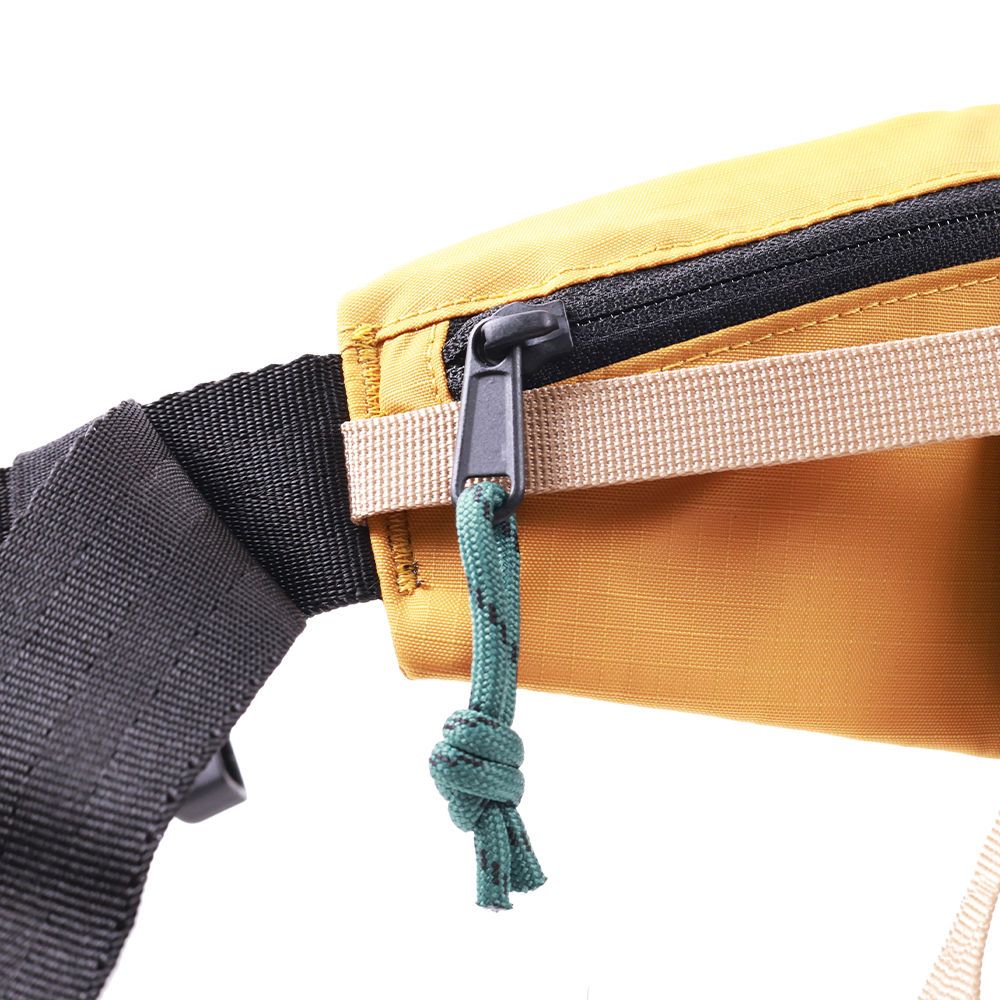
Define measurable targets rather than vague desires. Set material grades (e.g., 420D recycled nylon with TPU laminate, 10–12 oz polyethylene foam), stitch counts per inch, seam types (double-needle bartack at load points), and hardware spec (YKK or equivalent, metal-reinforced buckles). Require quantified water resistance (minimum 1,500 mm hydrostatic head) and abrasion resistance (Martindale cycles). Specify ergonomic dimensions: strap width, maximum adjustable range, and center-of-gravity placement for a 1–3 kg load. Include test standards in the PO: tensile load for webbing, salt-spray for metal fittings, and accelerated UV exposure for colorfastness. These targets let factories quote realistically and let your QC team reject ambiguous samples.
Common procurement pitfalls and how to avoid them
Vague specs, insufficient pilot runs, and ignoring end-user contexts cause returns. Don’t accept “water-resistant” without a test report. Avoid sole reliance on photos—insist on physical samples with full trim lists and mill certificates. Include a pre-production sample approval (PPS) milestone and require a third-party lab report for flammability and ASTM tensile thresholds when applicable. Plan MOQ with insertion of a small validation batch (100–300 units) to learn assembly bottlenecks and packaging damage vectors. Specify clear packaging requirements: inside poly bags with desiccant, reinforced cartons, and drop-test affirmation. Document corrective action timelines for failed lots to prevent repeated defects.
Comparative choices: one-belt hip pack, convertible sling, or modular system
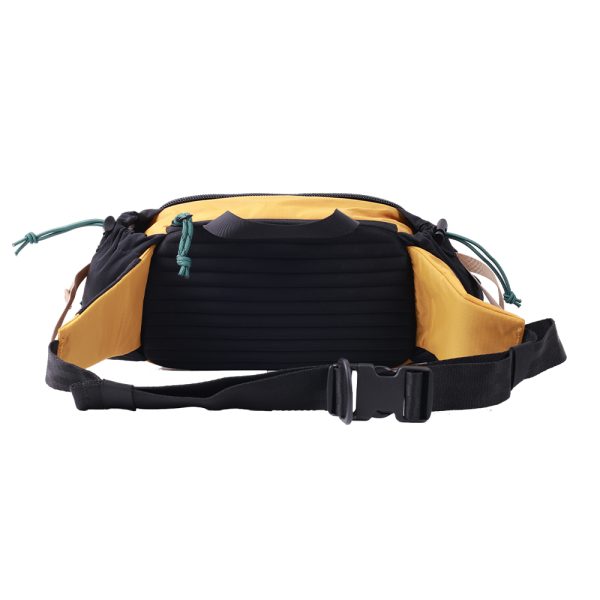
Decide based on use-case. Minimalist hip packs reduce bulk but limit capacity; choose them for urban travel where theft-resistance matters. Convertible sling designs offer crossbody security and better weight distribution for day hikes. Modular systems with removable pouches suit multi-day itineraries but increase assembly complexity and cost. Compare prototypes in a structured wear-test: three 4-hour sessions on walkways and trails, with load weights of 0.5 kg, 1.5 kg, and 3 kg. Track pressure points, strap slippage, and access speed to pockets. These concrete metrics guide the final spec without guesswork.
EEAT: experience-based guidance and a single real-world anchor
As an energy systems analyst who has led field-equipment procurement for multi-week remote surveys, I apply the same verification rigor to small-format packs: objective tests, field trials, and supplier audits. For travel-specific validation, consider usage scenarios from long-distance trails like the Appalachian Trail where hikers rely on compact, durable storage—these conditions stress closures, abrasion resistance, and quick access. When selecting a production-ready option, cross-check prototypes against lab and trail feedback and compare to a tested benchmark such as the best waist pack for travel to gauge retention, hardware reliability, and fit under load.
Checklist: specification, validation, and launch
Use this sequence: (1) Draft a detailed technical spec with materials, tests, and tolerances; (2) Request mill certificates and hardware datasheets; (3) Approve PPS with lab tests attached; (4) Run a validation batch with field trials and 3rd-party QA inspection; (5) Lock packaging and labeling specs; (6) Schedule ongoing QC sampling and a corrective-action SLA. Track supplier corrective actions quantitatively: defect rates, rework hours, and time-to-resolution. These elements keep procurement decisions traceable and defensible.
Final synthesis: procurement that delivers real-world value
Frame procurement as an engineering project: measure what matters, validate in the environments your users will actually use, and enforce precise acceptance criteria. That approach reduces returns, shortens rework cycles, and yields a product that performs on trail or city street. For manufacturers and buyers seeking a pragmatic, tested solution backed by field and lab comparison, ChangRong fits naturally into this quality-first supply chain without theatrical claims—just usable, verifiable results.