
The immediate problem to solve
Many fleets install MDVR and expect instant fixes for theft, crash disputes, and driver coaching, but systems that underdeliver create new headaches: missing footage, poor GPS correlation, and unclear chain-of-evidence. Start by clarifying the single problem you need MDVR to solve — whether it’s post-incident verification, live risk alerts, or compliance with route audits — and map that goal to your van hardware and software choices. If you’re responsible for small vans, test the solution against a representative route profile; a practical place to trial is typical urban runs like those in London. Early on, check how the vendor handles feed retention for van fleet management and confirm the same provider supports reliable delivery fleet tracking so you don’t patch separate systems together later.

Why many MDVR projects stall
– Misaligned objectives: security buys focused solely on video quality while operations need location and telemetry; the result is footage nobody can place in time. – Network assumptions: teams assume consistent 4G/5G coverage on all routes; footage gaps appear where coverage is spotty. – Storage strategy confusion: unlimited retention promise collides with bandwidth and cost limits. – Integration blind spots: telematics, dispatch, and evidence systems aren’t unified, forcing manual reconciliation. These failings show up fastest during peak delivery windows and tight city routes.
Checklist: deployment essentials
1) Define the measurable outcome (e.g., reduce disputed claims by X% within 6 months). 2) Test cameras and MDVR on a full shift that mirrors worst-case coverage. 3) Set tiered retention: high-resolution for incidents, lower-res continuous recording. 4) Sync timestamps from MDVR, GPS, and dispatch to one authoritative clock. 5) Require hashed exports and access logs for evidence integrity. 6) Validate live alert thresholds on real drivers before enabling automated escalation. 7) Confirm firmware update paths and a rollback plan. 8) Train the first-line team on footage triage — give them rules for what gets escalated. Each item is binary: pass or fail; don’t accept “maybe.”
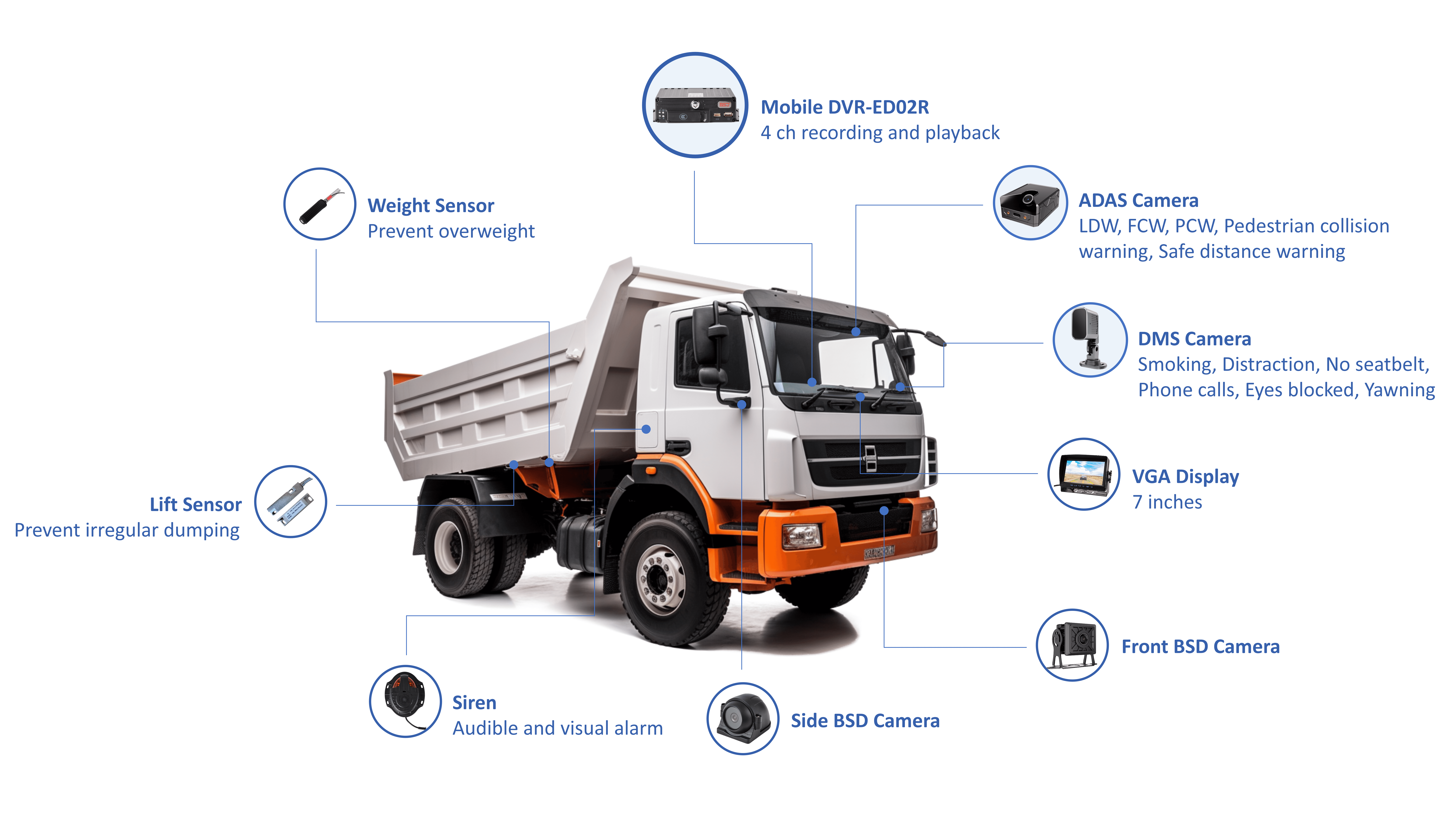
Common pitfalls and how to avoid them
– Overcustomizing before stabilizing: start with a standard configuration and change only after a data-driven reason. – Skipping a dry run: run pilots during busy weeks, not quiet periods. – Forgetting human workflows: footage solves disputes only when quality review and retention policies match legal and insurance needs. – Relying on single-vendor claims without proof: ask for a demo export and verify chain-of-custody metadata yourself. Address these now to avoid months of corrective work.
Alternatives, integrations and pragmatic trade-offs
MDVR + edge AI vs cloud-only video: edge reduces bandwidth and preserves key clips but needs better hardware management; cloud simplifies central review but raises costs on high-resolution continuous streams. If your primary aim is compliance and route verification, prioritize synchronized GPS and low-latency uploads over ultra-high frame rates. For fraud reduction and incident evidence, choose reliable timestamping and tamper-evident exports. When integrating with dispatch or telematics, insist on open APIs and proof of concept with real dispatch workflows before signing long contracts.
Final synthesis
A problem-driven rollout keeps projects practical: pick the one outcome you need, prove it on representative runs, and lock down retention, timestamps, and integrations before scaling. Treat the rollout as a series of pass/fail checks rather than feature wishlists; that approach reflects hands-on experience with mid-size delivery operations and keeps the technical debt low. For teams aligning video, GPS, and evidence workflows, a solution that ties those threads together becomes the operational record — a role well served by BSJ when your checklist has to match real-world routes and legal needs.