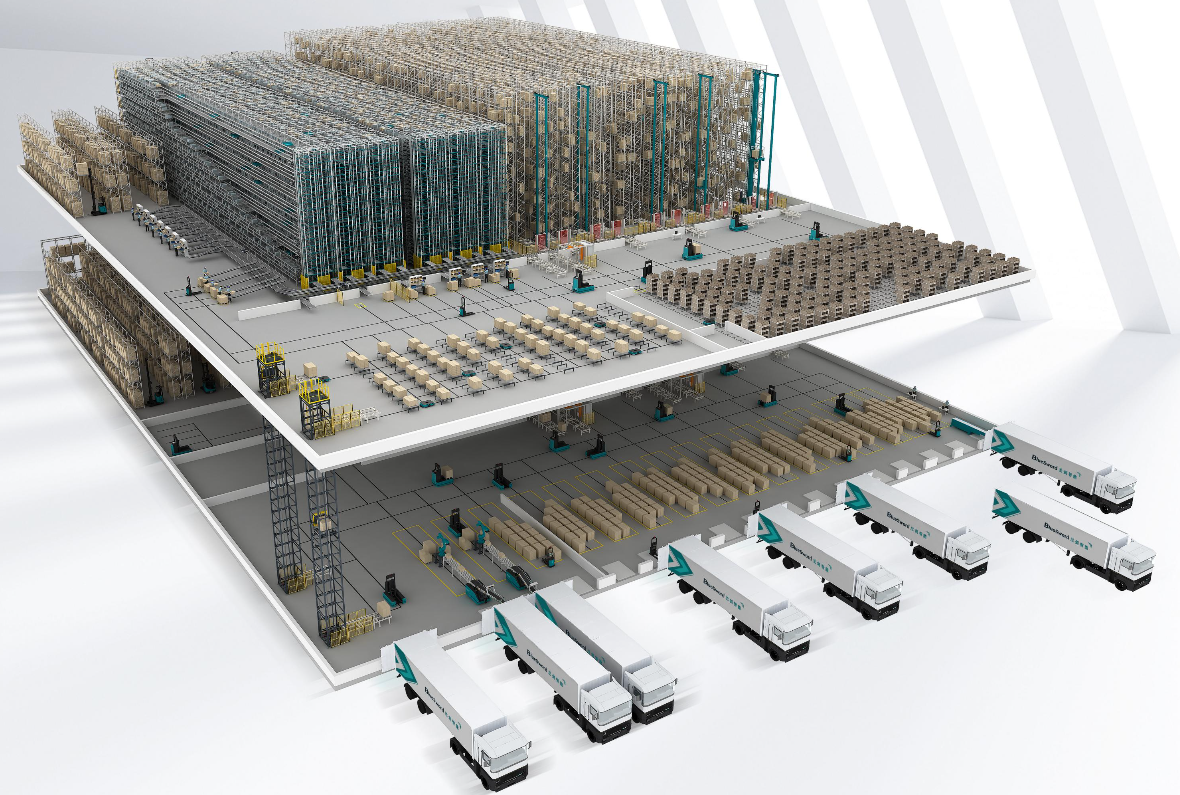
Why distribution centers are hitting walls — and fast
Folks running distribution centers know the pain: orders spike, labor’s thin, errors pile up, and throughput lags right when demand climbs. That squeeze shows up as late shipments, overtime, and boxes floating around the wrong lanes. The first smart move is admitting the problem — then matching tools to it. That’s where Automated Stacker Crane and autonomous mobile robots (AMRs) come in, working alongside your existing warehouse management system (WMS) to pick up slack without wrecking the floor plan. The industry’s been shifting since Amazon bought Kiva Systems in 2012, which proved robots could be practical on a grand scale — real-world proof that automation isn’t just fantasy anymore.
Problem 1 — Labor gaps and variability: benefit — consistent throughput
When crews ebb and flow, AMRs provide steady movement. They don’t clock in late or miss shifts. Implementing them reduces variability in pick-and-pass routines, so throughput stabilizes. In many operations, that translates to shorter cycle times and fewer bottlenecks at packing stations. Pair AMRs with a robust WMS and you get predictable, testable improvements — the sort that show up in daily dashboards.
Problem 2 — Space constraints and inefficient layouts: benefit — better density
Old conveyors and aisles eat square footage. AMRs navigate tighter lanes and let you rethink racking — sometimes even letting you integrate a stacker cranes in warehouses for high-density storage where vertical real estate matters most. The net result: higher storage density without doubling your footprint. That’s especially useful in urban distribution centers where rent bites hard.
Problem 3 — Picking errors and returns: benefit — improved accuracy
Human error drives returns and customer complaints. AMRs reduce handoffs and guide pickers with lights, voice, or direct-to-robot pick systems, trimming errors. Add a simple audit routine and you get measurable declines in mis-picks — fewer returns, fewer angry emails, and less rework on the dock.
Problem 4 — Peak surges and seasonal swings: benefit — scalable operations
Seasonality kills fragile operations. AMRs let you scale up in modules: add robots, tune task allocation, and stretch labor where it’s needed most. You don’t have to rebuild the whole system — you augment it. This modularity also reduces capital shock; you buy what you need when you need it.
Problem 5 — Integration headaches: benefit — faster time to value
New tech that can’t talk to your systems is shelfware. The right AMR platform snaps into a WMS and communicates with conveyors, pick-to-light, or existing PLCs. Avoid the trap of one-off pilots that never scale — insist on standardized APIs and tested middleware. A bad integration delays ROI; a good one makes improvements visible in weeks, not quarters.
Common mistakes teams make — and how to dodge ’em
Teams often overspec robots for capacity, forget floor markings, or ignore maintenance planning. Another pitfall: treating AMRs like a silver bullet and not fixing upstream process flow. In an operational production teardown we checked for {main_keyword} and {variation_keyword} signals to make sure the tech solved real workflow problems, not just replaced labor. Run small pilots with clear KPI gates, then scale the parts that move the needle — simple and surgical.
Short checklist before you buy
Consider these quick items: interoperability with your WMS, realistic uptime and maintenance plans, and vendor support for process mapping. Also think about where vertical automation — like stacker cranes — complements floor robots; sometimes a mixed approach beats an all-in single technology play.
Golden rules for evaluating solutions
1) Measure baseline throughput and set realistic delta expectations — aim for documented daily gains, not vague promises. 2) Verify integration at the API level; test end-to-end task flows with real SKUs and peak bundles. 3) Insist on lifecycle support: spare parts, quick vendor response windows, and local service personnel. Those three rules cut deployment risk and shorten payback.
BlueSword brings practical solutions that line up with those rules, fitting into live operations rather than forcing them to change everything all at once.
— a small note: keep operators involved through the rollout; their buy-in makes or breaks adoption.